How to Write a Setlist That Keeps the Room Full
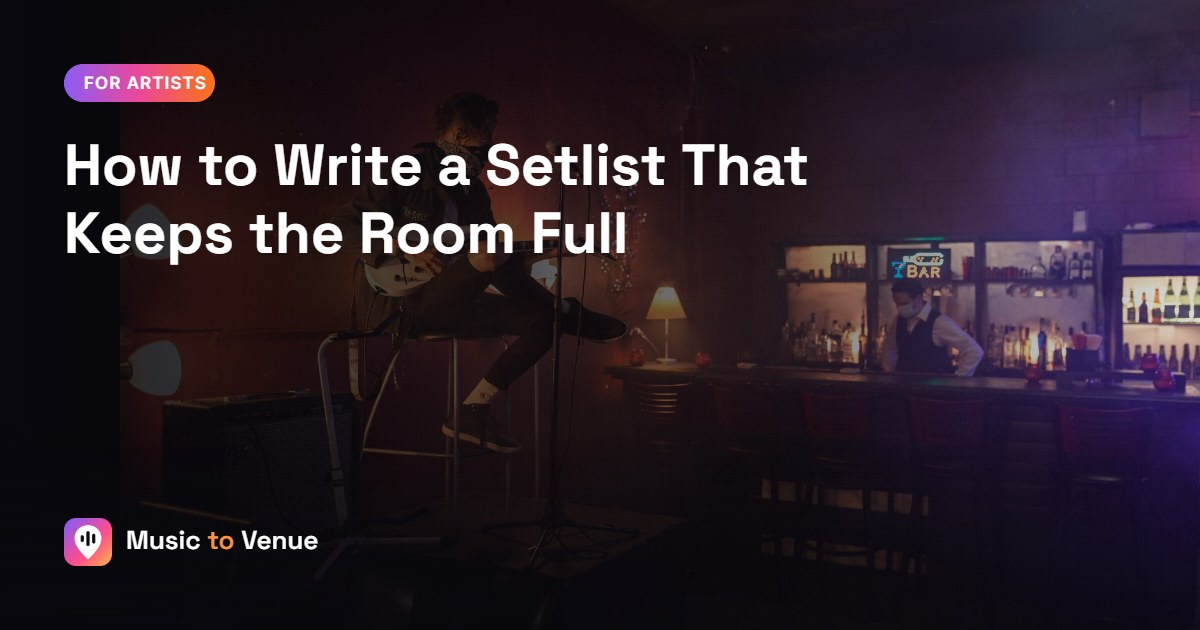
A great setlist opens strong, builds energy in waves, places slower songs where the room can breathe, and saves a crowd favorite for the end. Plan each set around the venue’s night, not just your favorite songs, and keep a few flexible “swap” songs ready so you can read the room and adjust on the fly.
Venues remember the acts that keep people in their seats and ordering another round. Most of that comes down to the setlist. Two bands with the same talent can have very different nights depending on how they order their songs. Here is how to build a setlist that works for bars, restaurants, breweries, and private events.
Start With the Venue and the Night
Before you pick a single song, answer three questions:
- What is the room for tonight? Dinner service, a Friday bar crowd, a patio brunch, and a ticketed show all need different energy.
- How long are you playing? Many bar gigs run three sets of about 45 minutes with short breaks. Confirm the schedule in your gig agreement.
- What does the venue expect? Mostly covers, mostly originals, or a mix? See covers vs originals.
The Basic Shape of a Strong Set
- Open with confidence. Start with an upbeat song you play extremely well. The first minute tells the room whether to pay attention.
- Keep momentum early. Follow with two or three songs at similar energy so the room settles in.
- Create waves. Alternate between higher and lower energy every few songs. Constant intensity wears people out, and constant mellow songs lose them.
- Place ballads carefully. Put slower songs in the middle of a set, never back to back in a bar.
- Build toward the end. The last three or four songs should climb toward your strongest crowd pleaser.
- Close big. End each set with a song that makes people want to stay for the next one.
Plan Each Set Differently
- First set: often background for early arrivals and diners. Keep it warm and approachable, with lower volume if the venue asks.
- Middle set: the room is usually fullest. Bring your best known songs and highest energy.
- Last set: play to the people who stayed. Requests, singalongs, and dance songs work well here.
Smooth Transitions
Dead air between songs is where rooms lose energy. Group songs by key or tempo so transitions feel natural, keep tuning quick, and have a short line ready to introduce the next song. Segues between two songs in the same key can keep a dance floor moving.
Keep Swap Songs Ready
Write a short list of backup songs beside your setlist: a few higher energy options, a few mellow options, and a couple of reliable requests. If the room is quieter or livelier than you planned, swap songs without breaking stride.
Read the Room
- Watch the bar and the floor. If people are leaving or talking over you, change the energy.
- Notice what gets phones out or people singing, and play more like it.
- Check in with the manager between sets. A quick question about volume or vibe builds trust.
Setlist Formats That Save Time
Use large, readable print taped to the stage or a tablet app your whole band can see. Include the key, tempo, and who starts each song. Keep master versions for each type of gig, like brunch, bar night, and private event, so you are not starting from scratch.
Turn Good Nights Into Rebookings
A well paced setlist is one of the easiest ways to get invited back. Ask the venue what worked, note it, and refine your list each time. Then share your profile and setlists with venues looking for acts. Artists can join Music to Venue during early access, and venues in Las Vegas and Salt Lake City can join here to find acts that fit their room.
FAQ
How many songs are in a 45 minute set?
Most bands fit about 10 to 13 songs in 45 minutes, depending on song length and how much you talk between songs.
Should I open with my best song?
Open with a strong, upbeat song you play confidently, but save your biggest crowd favorite for the end of the set.
Is it okay to change the setlist during a gig?
Yes. Keeping swap songs ready and adjusting to the room is a sign of an experienced act.
Book live music without the back and forth
Music to Venue connects bands, solo artists and DJs with venues in Las Vegas and Salt Lake City. Free to join. Artists keep 100% of their fee.
Keep reading
 Artists How to Get Rebooked by the Same Venue Again and Again
How artists get rebooked by the same venues: what venues are really buying, how to run the night, when to ask, and the follow up that seals it.
Nov 13, 2026
 Artists Stage Plot and Input List: What Venues Need From Your Band
What to include in a stage plot and input list, how to make them, and when to send them so venues and sound engineers are ready for your show.
Nov 10, 2026
 Artists Covers vs Originals: What Venues Really Want to Book
Most venues want mostly covers, but originals win in the right rooms. Here is how to match your set to the venue and get rebooked.
Oct 27, 2026