Stage Plot and Input List: What Venues Need From Your Band
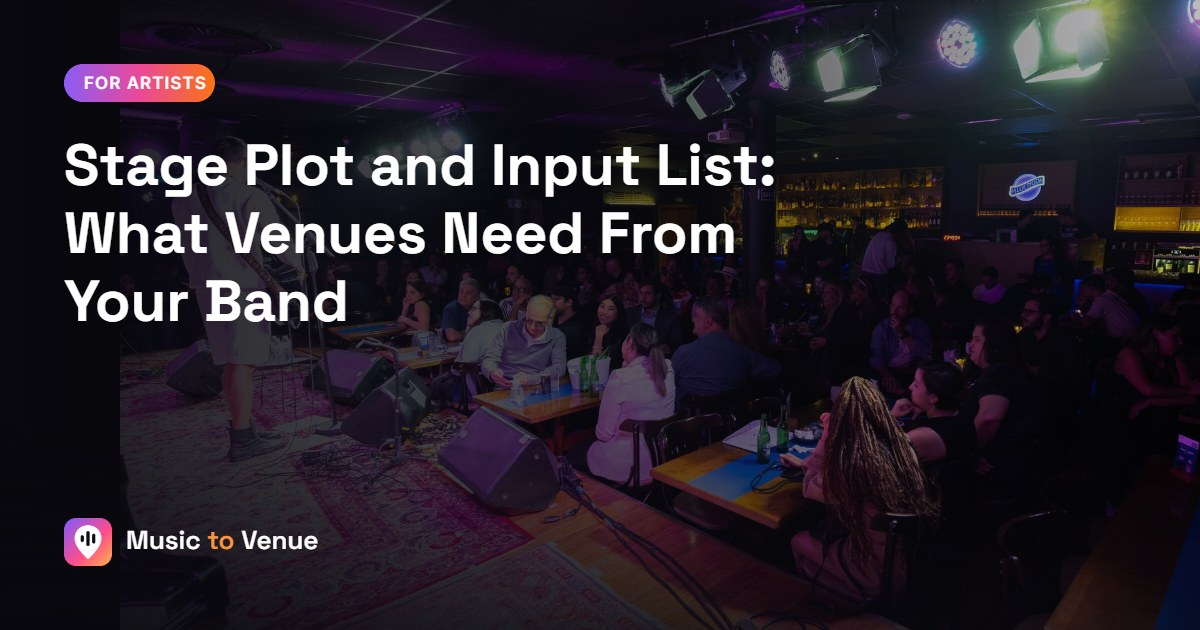
A stage plot is a simple diagram showing where each band member and piece of gear sits on stage, plus where you need power, monitors, and microphones. An input list is a numbered list of every channel the sound engineer needs to set up. Send both with your booking confirmation, keep them to one page, and update them whenever your lineup or gear changes.
Sound engineers and venue managers love bands that show up organized. A clear stage plot and input list help the venue prepare the right mics, cables, and monitors before you arrive, which means faster load in, a smoother soundcheck, and a better sounding show. Here is what to include and how to make them.
What a Stage Plot Includes
- Stage layout viewed from the audience, with front of stage clearly marked
- Each performer’s position and their instruments
- Amplifiers, drum kit, keyboards, and other large gear
- Vocal mic positions for each singer
- Monitor wedges or in ear needs for each position
- Power drops where you need outlets
- DI boxes for acoustic guitars, keyboards, bass, or playback
- Band name and a contact with phone and email
Keep it simple. Basic shapes and labels are easier to read than detailed artwork.
What an Input List Includes
The input list tells the engineer what goes into each mixer channel. A typical format looks like this:
| Ch | Source | Mic or DI | Stand |
|---|---|---|---|
| 1 | Kick | Kick drum mic | Short |
| 2 | Snare | Dynamic | Clip or short |
| 3 | Overhead | Condenser | Tall boom |
| 4 | Bass | DI | None |
| 5 | Electric guitar | Dynamic on amp | Short |
| 6 | Acoustic guitar | DI | None |
| 7 | Keys left | DI | None |
| 8 | Keys right | DI | None |
| 9 | Lead vocal | Dynamic vocal mic | Tall boom |
| 10 | Backing vocal | Dynamic vocal mic | Tall boom |
Note anything you bring yourself, such as your own vocal mic or in ear system, and anything you need the venue to provide.
Monitor Mix Notes
Add a short section listing what each performer wants in their monitor, such as “Lead vocal: vocals and acoustic guitar, a little kick.” This saves time at soundcheck and helps the engineer start close to right.
Small Gig vs Full Production
A solo acoustic act at a restaurant may only need one vocal mic and one DI. Even then, a short plot helps. If you bring your own PA, say so clearly and list your power needs and setup footprint. For larger venues and festivals, include stage dimensions you need, riser requests, and changeover notes.
How to Make Them
- Use a free online stage plot tool, a slide app, or even a clean hand drawing scanned to PDF.
- Keep it to one page if possible, in PDF format.
- Name the file clearly, for example “BandName Stage Plot 2026.pdf.”
- Store it in your electronic press kit. See how to build an EPK.
When to Send Them
Send your stage plot and input list when you confirm the booking, then again a few days before the show. Include them in your gig agreement as a technical rider if you have specific needs. Arrive on time for load in and soundcheck, and bring a printed copy.
Common Mistakes
- Sending an outdated plot after a lineup change
- Listing more inputs than the venue’s mixer can handle without asking first
- Forgetting power needs for pedalboards and keyboards
- Not marking which gear you bring and which you need
Show Venues You Are Ready to Book
Professional details like a stage plot make it easier for venues to say yes. On Music to Venue, artist profiles include space for set lists and stage plots so venues can see what you need before they book. Artists can join during early access, and venues can join here.
FAQ
What is the difference between a stage plot and a tech rider?
A stage plot shows where people and gear go on stage. A tech rider is a broader list of technical requirements that often includes the stage plot and input list.
Do solo acoustic acts need a stage plot?
It helps. Even a one line plot showing one vocal mic, one DI and a monitor saves time for the venue.
How many channels does a typical bar band need?
Many four or five piece bands need 10 to 16 inputs. Check the venue mixer size when you book.
Book live music without the back and forth
Music to Venue connects bands, solo artists and DJs with venues in Las Vegas and Salt Lake City. Free to join. Artists keep 100% of their fee.
Keep reading
 Artists How to Get Rebooked by the Same Venue Again and Again
How artists get rebooked by the same venues: what venues are really buying, how to run the night, when to ask, and the follow up that seals it.
Nov 13, 2026
 Artists How to Write a Setlist That Keeps the Room Full
How to build a setlist that keeps people in the room: opening strong, energy waves, set by set planning, transitions, and reading the room.
Nov 3, 2026
 Artists Covers vs Originals: What Venues Really Want to Book
Most venues want mostly covers, but originals win in the right rooms. Here is how to match your set to the venue and get rebooked.
Oct 27, 2026